Fire-Walking the Realms of Gold

Splitting the Atom – Lessons in Walking

Fire

Parting of the Soul


Parting of the Soul — Roberto Lauro


Slow-Walking the Shore Trail,

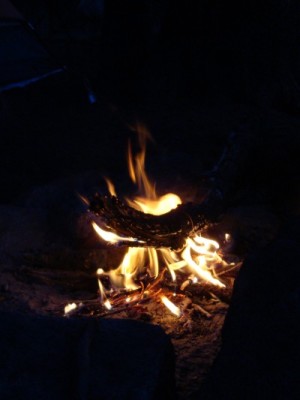
Soft breeze on your face, the magic City across the Bay, you may not notice you’ve been fire-walking the sea of intelligence.  Reality, after all, is a compelling illusion. But if you would like a glimpse of the fire beneath your feet and the furnace within the atoms of your body, here’s how fire-walkers do it:

You have to spend the day preparing the fire and tending the coals.  You have to sit around chatting, eating, raking the ash off, watching twilight fall.  After a while you quiet down.  Your concept of fire releases its grip and you relax.  Thinking back, you  realize the intensity of the fire is in you, not the coals. That’s  your idea.  That is how a fire-walker  friend described his experience to me, but it’s the story all artists tell ‒ aerialists (like Philippe Petit who in 1974  illegally strung a wire between the tops of the World Trade towers and strolled across.), sculptors, physicists, philosophers, plumbers, and roshis.

Things quiet down,

opinion loses it’s grip,

then you can do back flips,

look into the atom. 

Then you see.

✳✳✳✳✳✳✳

Gold-Vermillion

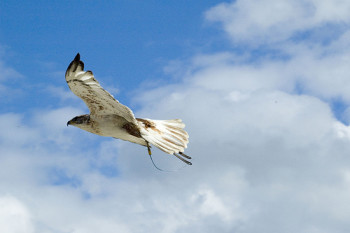
Maybe you’ll see a hawk with the intensity that  Sidney Field did one afternoon in  the Hollywood hills (described in my post of   January 29, 2013) or the way Gerard Manly Hopkins saw a windhover (kestrel, falcon) on an illuminated morning in 1918 and thought of the fire that breaks from Christ, “a billion times told lovelier.”

windhover

The Windhover

To Christ our Lord

I CAUGHT this morning morning’s minion, king-    
  dom of daylight’s dauphin, dapple-dawn-drawn Falcon, in his riding    
  Of the rolling level underneath him steady air, and striding    
High there, how he rung upon the rein of a wimpling wing    
In his ecstasy! then off, off forth on swing,            
  As a skate’s heel sweeps smooth on a bow-bend: the hurl and gliding    
  Rebuffed the big wind. My heart in hiding    
Stirred for a bird,—the achieve of; the mastery of the thing!    
 
Brute beauty and valour and act, oh, air, pride, plume, here    
  Buckle! AND the fire that breaks from thee then, a billion           
Times told lovelier, more dangerous, O my chevalier!    
 
  No wonder of it: shéer plód makes plough down sillion    
Shine, and blue-bleak embers, ah my dear,    
  Fall, gall themselves, and gash gold-vermillion.

Realms of Gold: Your Piece of the Pie

Any GPA You Want

OLYMPUS DIGITAL CAMERAHomecoming         Get Your A Book
The poem of creation
 surging  in the brain’s
 electric circuitry,
 engulfing the soul
  in music.   


Here’s a preposterous statement you will agree with once you think about it.

If you are reading this sentence,

You are perfectly capable of achieving any GPA you want

and of doing whatever you need to do or want to do in your life.

People can do anything they need to do, lift the car off their child pinned beneath it, walk a tightrope, climb El Capitan, hook up the DVD player, sing at Carnegie Hall.  If there is such a thing as higher intelligence – and the definition of intelligence is up for grabs – it doesn’t seem to have much to do with getting things done.

Will and need and circumstance are much more powerful than intelligence.

Each human being has his or her piece of the intelligence pie. 

 So do lilies, spiders, cells and quartz crystals.  Each of us processes information in our own way, from our own unique aspect of the continuum.

Individuals with down syndrome – as well as everyone in  the entire range of human physical and mind configuration – have a special window on the world.  Each of us.  Together, with the rest of the intelligent universe, we complete the pie.


Our job is to be who we are.

When we use our natural traits, we can do amazing things.

 winging the heavens on a updraft,
            scratching fleas.
            spinning verbal webs,
            and webs of silk.

Lighting Up the Realms of Gold: Charles Demuth and William Carlos Williams

What’s  There

500px-Demuth_Charles_I_Saw_the_Figure_5_in_Gold_1928It’s the time you spend on your rose.

–  The Little Prince

 
Generally, by the time you are real
most of your hair has been loved off.
– The Velveteen Rabbit


Surface-Features Opportunity

Here’s a chance to sharpen up your vision of the facts.

  • Take a good look at this painting. Give yourself at least twenty minutes.  Just pay attention to any detail actually there on the surface, shapes, sizes, colors, words – any detail no matter how small.
  • Try not to give meaning to the painting while you’re taking this surface-features excursion.  Also,  do as little evaluation, judging, critiquing, as yo can.
  • Keep doing this till you run out of details.  You won’t!  But you will get the hang of it in twenty minutes.
  • Now, step back and look at the whole painting again.  Did you brighten it up?  Did you love off some of its hair?

My Commentary follows.

However –

You will spoil your fun if you read my commentary without doing the surface-features game first. 


When my students and I used to do this together, we’d go around and ask each person to point out something in the painting that hadn’t already been noted.  We kept on for several rounds.

What happened was that each time a detail was pointed out it was as if that bit of the painting had a spot light on it.


The painting got more and more vivid as we went along.


By the time we stepped back and looked at the painting whole, it was a new painting, brilliantly visible.

The same painting, but seen intensely.

And no one even felt like criticizing it. We had entered the realms of gold.

William Carlos Williams and the Figure 5

After reading a poem by his friend William Carlos Williams, Charles Demuth did this painting, I Saw the Figure 5 in Gold, in 1928 — it hangs in the Museum of Modern Art in New York. Here’s the poem:


The Great Figure

Among the rain

and lights

I saw the figure 5

in gold

on a red

firetruck

moving

tense

unheeded

to gong clangs

siren howls

and wheels rumbling

through the dark city.

Art Lesson

Notice how the words can illuminate the painting

         and

how the painting can illuminate the words.

Workplace Realms of Gold: Illuminating the Moment

How Your Spirit fills the Space

Sunlight on Flowers


The other day, I picked a couple of blossoms and some leaves along the lagoon where I walk sometimes, and when I got home we put them in a slate bud vase on our dining room table.  The sunlight and shadows reminded me of Boehme’s sunlight on a pewter bowl and of something a student had written long after our classes together.

I used to tell my students I hoped they would never have to ‘work’. Some of my colleagues considered such talk irresponsible.  But my students understood that I hoped they would find their bliss and follow it and that it was not so much what you did everyday but how your spirit filled that space.  Carol had done the brave thing and come back to college, not so much to get ready for a good job as to see if there might not be more to the moment than sweat.  I was glad to see some ten years later how things were going with her:

Liquid Amber —  By Carol Stout

I brought red, purple, orange and green fall leaves to someone longer than ten years ago.  I walked into his office as he got to his feet, smiling.  Did he have something I could put it in?

 
Earlier that morning, I hadn’t been able to resist picking them from the trees in my back yard, magnificent from my kitchen window, their deep and fiery hues.  I’d made a bouquet for the kitchen, but had captured more wonder than could be contained in one vase.  OK, give someone else a close-up look at a bit of the everyday magic.  I’ll take them to the college and give them to my English teacher.  I knew he would be the right person.
He liked making ordinary things  ‘extra-ordinary;’ and many of us would make up excuses to drop by.  We always left feeling better.  I read years later that someone had said that of T. S. Eliot.  I knew what that writer meant. Lots of us became addicted to his capacity to illuminate ordinary moments.   We were  learning how to do that for ourselves, how to see every day as an adventure, to watch for the surprises that would unfold this day.
He reached into a bottom desk drawer and pulled out an old Ball glass canning jar. New leaves, old jar. A small moment?

 
In this present time, where I work, we like to take turns bringing goodies for celebrations  ‒  or for no special reason at all  ‒  we just like being accomplices in the criminal activity of wonder.  So, it’s  October and the trees are just now changing in the Bay Area.  I am on my break walking along a path near our office slow enough to soak up my surroundings.   At that pace noticing the blaze of leaves can’t be ignored.  A many-hued branch of liquid amber reaches out, beckoning me closer.  It is just the shape and size for a vase.
“Well, let’s bring a little something from the outside in,” I think.  I’ll gather a few stems of the Toyon bush to go with the branch of liquid amber.  The toyon is loaded with berries just beginning to turn red.  They go well together, I decide, holding my work of art at the end of my outstretched arm in it’s vase of a hand.

 
In the lunchroom, I search for a suitable container.  My creation needs  properly framed.  And there, where it had been for weeks, without so much as a tiny jog to my memory, sits a Ball canning jar, complete with snap-on lid.  It fairly screams, “Use me, use me!”  Time and space evaporate as the rush of images and feelings of that other present, those other leaves, and that other jar transport me.

 
And I remember, too, how long ago, I noticed days later that the water was all gone in that other Ball jar.  The leaves were still colorful, and they had the added charm of being slightly curly, as if hooking a finger the viewer’s way, “Look at me, look at me!  I’m older and more wrinkly now, but I have a different beauty.”  But that day I said to my friend, “Oh, the leaves are dried out!”  I reached to take them off his desk, but he stopped me, putting into words the very thoughts I had just had.

 
“Well, yes, they have dried out, but   I like seeing them when I come in in the morning.”  Once again I left his office feeling good.

 
Years ago I brought red, purple, orange, green fall leaves to someone. I was an adult student returning to college, nervous about being back taking classes.  As I reflect on it , such  moments give us back the  world, the world of wonder at our finger tips. And  what I’m thinking now, this present moment, is that small moments enrich our lives, not just for that time and place but for moments yet to come, perhaps in some lunch room many years removed, yet richly connected to that ordinary moment.

Toward the Realms of Gold

Stopping Time

It doesn’t matter what train
we catch –

 OLYMPUS DIGITAL CAMERA


religion, science, mathematics,
poetry, music, painting,
baking, grape stomping —

 or walking along a mountain
path.

We look, we look,
and suddenly
we see.

Everything stops;
we come to rest
in eternity,
a timeless
now.

Then we can resume
gardening,
watching people on the street,
eating chocolate eclairs –
often in wonder.

“One has a vision;
one wants another.”

Slow-Walking the Neighborhood: Found Object into Objet d’Art

found object

Here’s an idea for your weekend:

Give the slow-walk I recommended in my January 15th post another go.

This time while walking bring back something you probably would not notice if you were actually going somewhere instead of just  . . .    walk    . . .    ing, preferably something least likely.

(Of course, this won’t work with little kids.  To them, everything is wonderful.)

Now figure out some way somehow or other  to present that object so that it can’t help but be paid attention.

Ordinary Reality Illuminated

One of my students brought back that little piece of bark in the picture above, fashioned into a pendant.  I’ve kept it around for decades, but the students were so good at it we took over some walls in the campus science museum put on an exhibition.

Objects found —  objects of art.

I think you will agree that all it takes to convert the ordinary into a rain-glazed red wheelbarrow is your beam of attention.

Right?

Let my know what you think.

If you are walking around

the planet

and see

what you are looking at

you will have discovered

a poem.


The Poetry of the 38 MUNI Bus

Emily:“Does anyone ever realize life every, every minute?”
Stage Manager: “No.  The saints and poets maybe.  They do some.”
                                  – Our Town

bus

Rolling Down Geary

The first thing I need to do
when I wake up
 is make sure
the music’s sweetly humming
on the nerve endings.

Now I’m ready for the 38 MUNI
and half an hour for catching glimpses
of the poem of creation.
With all the seats filled
and holograms standing,
it’s easy.

There we are
rolling along.
I fiddle with these baubles.

Then,

first stop, the ordinary,

then, second stop,  and intense vision
of the facts,

then, with rare good luck,
the supra-ordinary, the realms
of gold.

Then, I’m home again.

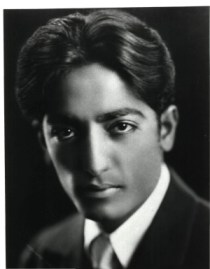
Krishnamurti and Sunlight on a Pewter Bowl

Jiddu+Krishnamurti

000-j--krishnamurti---the-transformation-of-man--f120164


One morning in around 1610 Jakob Boehme saw sunlight reflected on a pewter bowl and wrote that he had seen all heaven. In the early  twentieth century, a high school kid living in Hollywood was invited by his family’s friend Krishnamurti to attend a retreat in Holland. I included his account of his experience and its effect on his life in a chapter in the manuscript of The Realms of Gold.  Notice the similarity to Jane Goodall’s in Gombe and Notre Dame Cathedral I posted January 21.  Here’s Sidney Field’s story:

     Hawks and Sunflowers

Just after graduation from Hollywood High,  at the invitation of his family’s friend, Jiddu Krishnamurti, the Indian philosopher, teacher and mystic,  Sidney Field had traveled to Camp Ommen in Holland and to a pre-Camp gathering at Eerde, an elegant estate that had been set aside for Krishnamurti’s use in his teaching.  Sidney was seated with a number of other guests on a  Persian rug in the large library where Krishnamurti was giving a short welcoming talk.

      At some point during the talk, something extraordinary happened to me.  For no apparent reason I experienced a sudden outburst of intense joy in the region of the heart.  It went on and on in increasingly strong rhythmic waves, until I thought I would have to open my mouth and shout for joy. . . . It was an experience that practically lifted me out of my body, something I had never felt before or thought I could ever feel. 

  
Later, hoping to “preserve the fragrance of that indescribable moment as long as possible,” Sidney sat by himself under a shady elm and felt the force of the experience gradually quiet down and  leave a “ great sense of peace and up-welling love.”  Even though the intensity of the experience receded as the days passed, it informed all the years of his life.  Ten years his senior, Krishnamurti remained his friend and spiritual touchstone till Krishnamurti’s  death sixty years later.
Traveling in the Realms of Gold
On his way back to California from Europe Sidney had his second experience of ‘the miracle of  Eerde.’  He had left Chicago on the Sunset Limited feeling depressed and discouraged at the prospect of returning to the ordinary reality of American life.  He was standing on the open section of the observation car, thinking of nothing in particular, looking out at the hot and dusty desert, when

      a giant sunflower growing beside the railroad tracks, a few inches from destruction, brushed rapidly past my face, incredibly close, its golden face momentarily shutting out the world.  Like a coiled spring, the great joy, self-exiled these past few weeks, leaped out of me, as if to greet the daring flower beside the tracks – a joyous sunburst to a glorious sunflower!

When he looked back into the observation car, the world of a moment before was transfigured.  The same dull, fat people were still there, but touched with the laser beam of clarity, all as marvelous as the golden face that had momentarily stripped away the sackcloth of ordinary reality.  It had come totally unexpected and uninvited.
The preface to Sidney Field’s book KRISHNAMURTI The Reluctant Messiah in which he records these experiences begins with a line from  Yeats: “One has had a vision; one wants another; that is all.”  Back home and caught up in the family business, it seemed to Sidney the joy that had so overwhelmed him might recede over the years and become a fading memory.  But in Nichols Canyon in the hills just above his home, he found a way to be at peace with himself.  He would sit by the hour absorbing sounds and sights all around him with an acuity he had never before enjoyed.  One day, lying on his back and looking up at the sky, he became absorbed with a hawk circling high above, its flight “a thing of sheer beauty.”

    All at once the wondrous joy seized my heart.  It had returned!  I was ecstatic.  I let it carry me higher and higher . . .  in rhythmic waves of joy.  But the “altitude” and intensity of it held me back somewhat.  I knew I was dealing with a tremendous force entirely new in my life, and although I realized I must eventually let go completely, something kept me from surrendering completely to it.

After that, the experience came to him regularly, a joyous presence he cherished but which was sometimes so powerful he would pull back and let it unwind at a more bearable tempo. One evening on his way home from the hills, he writes, “I was so filled with the shining joy that everything my eyes met, whether a human being, an animal, a tree or a rock, called forth an outpouring of love.”  His body felt a vitality, harmony and balance he had never known before.  His mind was tranquil and crystal clear.  When he got home, a friend of the family exclaimed, “Look at Sidney!  Look at his face.  He must be in love!”  She had been right, he wrote,  but it was not the kind of love she was thinking of.
Even  so, there is a line between that-which-is (love) and ordinary reality beyond which a rare few venture.  Mark Bittner [ Who wrote of his own epiphany in The Wild Parrots of Telegraph Hill, and whose experience is described  earlier in the manuscript for Realms of Gold]  had stepped back the evening Dogen, the cherry-headed parrot,  pulled herself onto his chest and looked into his eyes.  Something had kept Sidney Field from going all the way through the magic opening.  He knew if we do not pass through without hesitation the opening will probably close.  That-which-is demands all or nothing.
Miracle on Sutter Street

Line Drawing of a Box.  Which of the two views on the right is correct?  See commentary in next post.

    Pooka

OLYMPUS DIGITAL CAMERA

One morning I saw a girl walking along Sutter Street in San Francisco.  She was talking on her phone.  I blinked and when I looked again, she was a bunched up bundle of golden sunlight. I blinked again and she was walking along as if no miracle had occurred.  I don’t think she realized that she is an atomic furnace of fiery energy.  She probably didn’t notice a ball of sunlight floating behind her wearing a watch cap, another one in a black coat headed into What-a-Grind, four white ones lined up outside, and all sorts of other bundles of sunshine all around her.  She probably thought it was just a street in San Francisco.

What do you think?


Sailing in the Sea of Intelligence


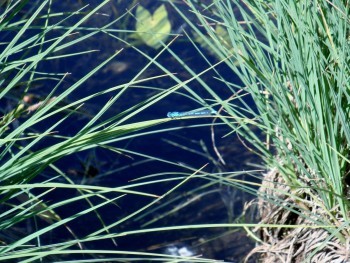
Dragonfly

Sailing in the Sea of Intelligence

I think

Of how flocks can fly
as if they were one being

Of how the brain can fix itself
and even assign
new jobs –
oh, and spiders, too.

Of how I can make things move
by thinking,
of how my heart beats
anyhow

Of how the cat knows
an earthquake’s coming

Of the simultaneity
of distant events

Of how
trees and refrigerators
and viruses and quartz crystals
and sub-atomic particles
can act intelligently

Of how the universe
is music
Of how you and I
and the spider
are the concert master

Of how thinking of these things
is to love again.