
Don’t Waste Your Time Reading
A COMMON-SENSE READING METHOD :BFAR
(This is the third post about the Mess-Around Method for dealing with stuff. You will get more out of it if you read the first two in sequence and then this one.)
You Deserve a Medal
You probably read the newspaper or browse the web beautifully. In that case you instinctively use great reading skills. Apply those skills to “serious” reading and you will get great results, too. In this and the next post, I’m going to call those skills to your attention and give you a handy acronym to remind you to apply them to any reading you do. It’s the Mess-Around Method, of course, but applied to a specific task: Reading.
Lousy Textbooks, Crumby Work-place Memos, Verbal Blizzards
Big news: Analysts have found what you already know; textbooks are boring. They are boring because the writing is bad. If the writing were good, you would love to read them. If, in all your schooling, you ever did find a masterpiece, it’s probably on your shelf right now. Legal briefs, mortgage statements, income tax instructions, all sorts of computer-related processes – all have their own little challenges, probably because they too are poorly written. But your native skills can be applied to any of these with satisfying results. You are capable of reading anything you need to read intelligently, efficiently and well. Let’s put that in bold type:
You are capable of reading anything you need to read intelligently, efficiently and well.
So let’s see how you do it when no one’s looking. When you pick up a newspaper, do you start in the upper left-hand corner, read through the first story word-for-word, then the next one in the same way, then the next? Then do you turn to page 2 and repeat the process and on through that section, and on section-by-section, reading each ad thoroughly as you continue, on to the Sports section – reading every single word about every single sport, Business, Entertainment, Want Ads, and on to the final period? Hell, no.
How You Probably Read the Paper
I’m using the newspaper as an example, but if you don’t read the paper, substitute the way you read a magazine or the way you “read” the internet. It’s the same process.
If you’re like me, you figure on looking through the paper over breakfast, probably no more than half an hour or so at the most, certainly not the whole day or the whole week. After all, there’s enough print in the daily paper to equal a short novel; Sunday’s a bear. So when you read the paper, you’ve already taken charge of how this is going to go, and you are going to get what you want and no more. Life is too short.
So, first, you might glance through the headlines on the front page, maybe look at the pictures, but if you’re like me, you turn immediately to your favorite part. I usually separate out the various sections and may notice lead stories as I go, but I always start with the funnies, and I read only my favorites, Doonsbury, Peanuts, and a couple of others. I ignore three-fourths of them.
Once I’ve completed the best part, what I do next depends on whatever catches my eye. I skip around, maybe dip into the first paragraph of a new item and move on, if that satisfies my interest. I skip whole sections. Sometimes I’ll browse through a story, and if it really connects with me, I may go back and read it thoroughly. I’ll even go back over a paragraph that’s puzzling and try to understand. And, if it’s that good, I’ll probably tell my wife all about it over coffee. She’s sure to ask me things I didn’t nail down and I’ll have to go back and skim through that part again. Yes, the antique fair is open only the first Sunday of the month and from 10 to 2.
That’s the way to read a paper, and you are so good at it you get an A.
Now then, apply that same brilliant reading strategy to “serious” reading, and you will be reading at your top powers. Clearly, you already know exactly how not to waste your time reading a school assignment, a contract, a will, a legal brief, instructions for setting up your new computer, pairing your ear-piece to your new cell phone, assembling an Ikea desk. You are in charge and you read well and with great efficiency. So let’s look back and see what your steps were. We’ll hit the high points here and in a later post I’ll flesh out the process and answer likely questions you may have. So here are the steps you took. I call it the BFAR reading method.
The BFAR Reading Method
Browse
Focus
Absorb
Reinforce
● Browse.
Glance through the whole thing. You’re deciding what you have to do or what you want to do with these words on paper. You can’t know that unless you do a little advance leg work. Treat it just like the newspaper. You’re the boss.
If it’s a poem you’re looking at and if you really like it, you may end up wanting to get the feel of every single word, but you won’t know that till you mess around with it a bit, and that isn’t likely to happen till you’ve given it the once-over– or as many once-overs as it takes till you zero in on what you really want from those words.
Usually, though, there will be big bunches of words you couldn’t care less about, whole paragraphs, whole pages, whole sections – like all those cautionary pages at the beginning of every kitchen device manual you are about to plug in. You already know all that stuff. You’ve been around a while, so there will be batches of information in anything you read that you already know. Messing around before you dig in is will reveal such things.
You’re sizing up the job, deciding what needs to be done, zeroing in, on what you want out of running your eyes over print.
Keep in mind the way you read the paper. Read anything else the same way, and you’ll nail it.
Tip: If you want to get good at this, give yourself a little less time than you think you’ll need. That will keep you on your toes. You want to be actively engaged, not passive.
● Focus.
Get the picture. Zip through for main ideas, usually three or four, and the reasoning (or whatever else your purpose requires) without stopping to underline or take notes.
After a bit of browsing – messing around, really – you will begin to focus as if you’ve twisted the adjustment ring of binoculars. You’ll feel yourself sliding into this level of understanding almost effortlessly. A clear picture will emerge and you will see where the good stuff is stashed – the big idea and key points that support it.
Then you can go where they are bring them into sharp focus. You will be surprised at how fast you can get this far just by some quick passes through the territory. There is a blizzard of data passing before your eyes every day, and you certainly don’t want to get lost in it. So if you found what you wanted, then this is a far as you need to go, and you should STOP. There are no rewards for reading stupidly.
On the other hand, if your browsing has revealed that, for your purposes, you really want to read the whole thing – a short story, for example – right through from word one to the final dot, you will have set the stage for intelligent reading. You will read far better and faster than if you had started in blindly without knowing what you are getting into.
For any kind of reading you will see how smart it is to browse and focus first. It’s a lot faster and it keeps you from getting lost in a ticket of words. It’s like hiking into the back country. If you decide to go backpacking in the wilderness, you don’t arrive at the trail-head barefoot in a T-shirt with no idea how long you’ll be hiking and what all you’ll need along the way–or even why you’re there in the first place.. It’s not too smart either to start in reading without getting an overview and deciding what you want from it.
● Absorb.
By this far along you probably have at least a general idea of the main point, but now it’s time to nail it down. So, if you’re reading an assignment or a document your boss wants you to understand for some reason or other, here’s what to do next.
Go back now and find the main idea and highlight or underline it, the key words only.
Put some sort of outline notation in the margin (I, II, III, *, etc.)
If they seem important enough to emphasize, underline or highlight supporting ideas. But mark as few words as possible to trigger your memory later. [For example, in the preceding sentence you could underline mark few words.] If you see some key sub-points, you can use A, B, C, in the margin.
Too many or too few notes will just waste your time.
Look at how neat what you marked is. There’s the point of the whole article or chapter laid out by you in a handful of words. Beautiful to behold.
What’s Going on in Your Brain
This step gives your conscious mind (your left-hemisphere, probably) some work to do. While it goes back over what you’ve unearthed and focuses on the essentials, what’s really happening is that a big door opens to your non-conscious mind, and that’s where your understanding is absorbed into your memory banks. And that’s where it has to be.
Memory and understanding are not the job of your conscious mind.
That’s why you don’t have to sweat it and why you can actually have some fun at reading. The non-conscious not only does the understanding for you but stores it. And the non-conscious never sweats.
And one more thing:
● Reinforce
Short-term Memory
Whatever is worked up in the conscious mind is like a page you just typed on your word processor. If you leave the page and don’t click the Save option, bye bye all that work. You’ve seen this happen plenty of times. Have a splendid thought and someone interrupts and it’s gone. That’s because the conscious mind can hold onto what it’s focused on only so long as you stay on the page. If you don’t “save” before you go off to the toilet, it won’t be there when you come back. So save it now and click Send – to your right hemisphere. Then you can safely go see what Jon Stewart is up to.
Here’s how you Save your work:
Put It in Your Own Words.
Plan A:
In your own words tell what you’ve absorbed to anyone willing to listen.. Your own words is the key phrase here. That’s how you make sure that you do understand. If necessary, skim back over anything fuzzy and fiddle with that part till that’s clear, too, and your listener signs off on it.
Plan B:
If no one else is around, write down the gist of what you absorbed.
● Reinforcing is the most important part of the entire process.
If you don’t reinforce, your work will fade from your short-term memory, and by tomorrow you will have forgotten most of what you accomplished. If you do reinforce, brief brush-ups are all that will be needed. If you marked up your pages, you won’t even need a separate notebook. It’s all there for review right where you need it.
BFAR In a Nutshell
There you have it, a complete reading course compressed into four words, Browse, Focus, Absorb, and Reinforce: Figure out what needs to be done. Focus in on the key ideas. Go through and mark what’s important. Put it into your own words.
In my next post, I’ll show you how to compress BFAR into one word.

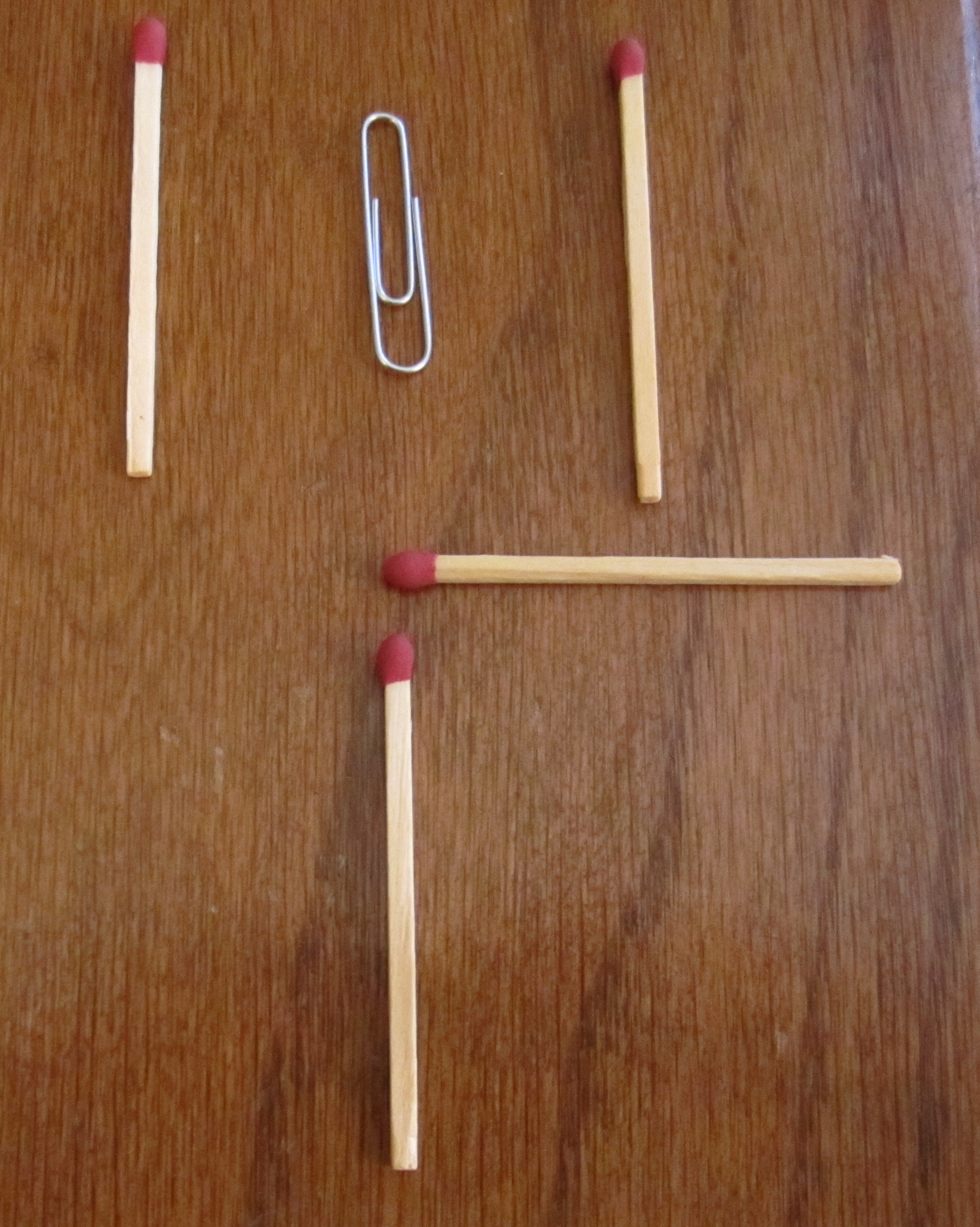
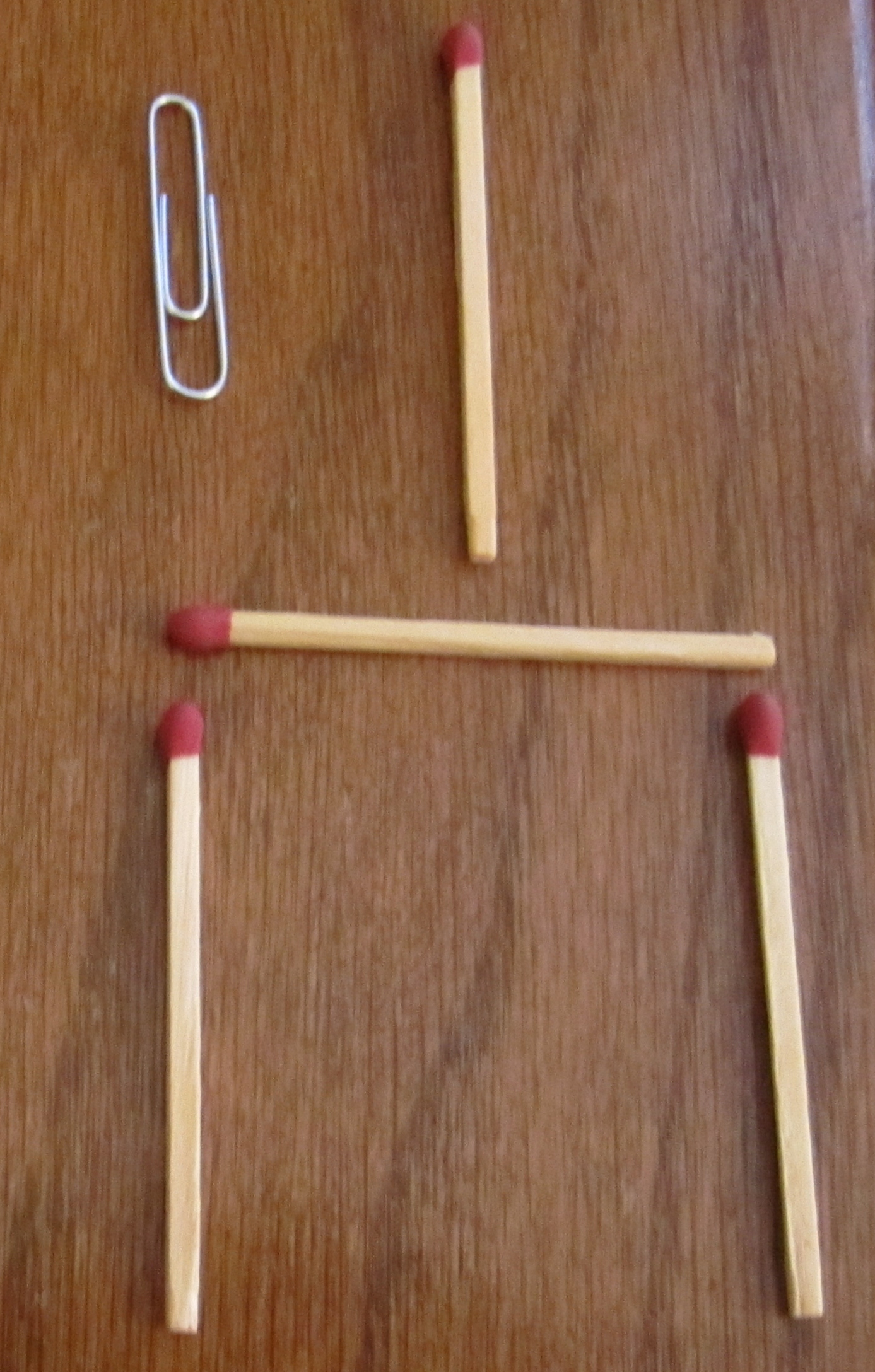
 Puzzle: Arrange six matchsticks to form four equilateral triangles.


 Realms of Gold