Jane Goodall: Slow-Walking Realms of Gold — Paris and Gombe


Notre_Dame_Cathedral_09-768x1024

The Miracle of Naked Existence

David Greybeard

     People “fall in love.”  It’s also possible to “fall in nature.”  That’s when you’ve been slow-walking your neighborhood enveloped in the realms of gold, marveling at what’s all around you, and then you feel yourself slipping out of the time-distance realm and entering a timeless now.  Sometimes,  when everything falls in place, a magical exponent kicks in.  In such moments, there is no barrier between the mind and the world it contemplates. The separation dissolves. In the manuscript of Realms of Gold, there are  numerous accounts of people falling in nature. One is Jane Goodall’s description of such moments in Reason for Hope: A Spiritual Journey.  Here’s an overview of her experience.

     One of those moments happened on  an afternoon in the hills of Gombe on the eastern shore of Lake Tanganyika.  She had been lying on her back in the forest and looking up at the green canopy above her. She  had been several months alone in those hills. She had spent those months getting more and more in tune with a spiritual power she felt all around her. There had been almost mystical timeless moments of beauty and awareness. But even in the midst of such beauty,  moments of true awareness were rare, and when they came, they came suddenly and unexpected.

     Cessation of Inner Noise

     As she lay there, she felt the old mystery stir again, and felt the cessation of inner noise. “It was like getting back into a beautiful dream.”  She described a magical enhancement of sound, a keen awareness of the soft movements of the trees, a squirrel skittering around the trunk of a tree, a great velvet black bumblebee visiting tiny purple flowers, his abdomen glowing rich orange red each time he flew through one of the patches of sunlight that dappled the forest.   Such words as Goodall chose to describe this experience can be found again and again in the writings of people who have experienced such “an intense vision of the facts,” as William Carlos Williams put it.

     The Soul Lying Down in the Grass

     Rumi, the 13th century poet, described this intensification  as the soul lying down in the grass.  When the soul lies down in that grass, he wrote, the world is too full to talk about. In such moments the world is wordless and experienced directly.  In such a state of  awareness, looking up into the green canopy above her, Jane could see David Greybeard — the first chimpanzee who had accepted her presence in the forest — moving about eating figs in the tree above her. In Reason for Hope, she goes on to describe the powerful occurrence that followed.  David Greybeard  swung from branch to branch down to the ground, moved a few paces toward her, sat down, groomed himself, and then lay back, one hand under his head and gazed up at the leafy dome above. Then he moved off and Jane followed him along a  trail and then through undergrowth till she caught up with him sitting on the bank of a stream — as if he were waiting for her. What happened next was still within her forty years later when she wrote about it in  Reason for Hope.

     She sat down close to David Greybeard and looked into his large lustrous eyes, eyes that seemed to her to express his entire personality, his serene self-assurance, his inherent dignity. She had learned he did not mind her looking into his eyes so long as it was without arrogance. That day he seemed to look back. What a miracle it would be, she had often thought, to be able to look out at the world through the eyes and mind of a chimpanzee — like the longing of many human beings to experience the interiority of some very different being — what it’s like to be a parrot, how the family fox terrier views her world.

     The Analogy Is Not the Territory

    Of course we can’t really imagine what it’s like to be a bat, Thomas Nagel wrote in 1974, , at best only what it’s like to behave like one. That is, the analogy is not the territory. And like is still one removed. To see through a bat’s eyes we have to get beyond analogy. What happened next for Jane Goodall was such a transcendence: As she sat there, she noticed a ripe red fruit lying on the ground. She picked it up and held it toward David Greybeard in the palm of her hand.

     David glanced at me and reached to take the nut. He dropped it, but gently held my   hand. I needed no words to understand his message of reassurance: He didn’t want the nut, but he understood my motivation, he knew I meant well. To this day I remember the soft pressure of his fingers. We had communicated in a language far more ancient than words, a language we shared with our prehistoric ancestor, a language bridging our two  worlds. And I was deeply moved.

     The Path With a Heart

     What’s the path that leads to a language “far more ancient than words,” that leads to realms of gold where there is no language chip, where nature and one’s own self are of a piece, and where no bridge is needed?  There is no one path. Some travelers, like Melville’s Ahab, never arrive. Some, like Coleridge’s Ancient Mariner, travel a hard road till, finally, they experience their kinship with all living things and “bless them unaware.” Jane Goodall’s path had always been guided by a sense that she was within some great unifying power. She writes that her absorption in the natural world and her love of all living things dated back to her earliest memories that still caused feelings of “such profound happiness” that tears would come to her eyes.

     This is the path Jane Goodall followed: She was a young woman in her mid-twenties little more than a year out of England and with no academic degrees and no scientific training when Louis Leaky picked her to go to Gombe and study the chimpanzees, but  he knew she had exactly what was needed. What he wanted was someone to go into the field uncompromised by expertise, a person with a child-like sense of wonder, in love with the natural world – and what came with it, the most important quality of all, monumental patience.

      The person Leaky chose  was a grown woman who had never grown up.  When she was just four years old, so the family story went, she spent more than four hours one afternoon hidden behind a hen’s nest so that she could find out how an egg was laid.  And there was Jubilee.  The child who would become world-famous for her pioneering work with wild chimpanzees met her first member of the species even earlier when she was given for her first birthday a large stuffed chimpanzee named Jubilee after the first chimpanzee born in a London zoo.  Jubilee remained Jane’s constant companion throughout her life.

     She was just what  Leaky needed, of course,  someone with the staying power to be for long periods away from civilization, to carry on work that might take several years.”When he put it like that, of course,” Goodall wrote, “I had to admit I was the perfect choice.” She had been preparing for it all her life. (When you think about it, we are all preparing all our lives for whatever it is we are up to at the moment.)  Her childhood had been filled with pets, a black mongrel named Rusty, “who taught me so much about the true nature of animals,” cats, guinea pigs, a golden hamster, tortoises, a terrapin and a canary. There had been earthworms and sea snails. Even the trees were living beings.

     In the Sea of Intelligence

     When Louis Leaky met the twenty-three-year-old Jane Goodall, it would have been hard to miss all that.  He made her his personal secretary on the spot and after she had spent a year working with him  and his wife  at the  Coryndon Museum of Natural History and at Olduvai Gorge, he offered her the chance to study the long-haired chimpanzees in the mountainous country on the eastern shore of Lake Tanganyika.  A year later with a small boat, a tent, and necessities for six months in the wild, Jane, a ranger named David Anstey who stayed a few days to get them started, and her mother Vanne – who has easily been persuaded to accompany her adventurous daughter – stepped ashore on the sand and pebble beach.

     While Vanne and David Anstey set up camp, Jane climbed the forested slope. Sitting on a rock, looking out over the valley and up into the blue sky, she wrote that she hoped that was what it might be like in heaven. Baboons barked at her, she heard a variety of birds, breathed the sun-dried grass and the heavy scent of ripe fruit.

     Where I Was Meant to Be

        By the time I lay down to sleep on my camp bed under the twinkling stars, with the wind rustling softly through the fronds of the oil nut palm above, I already felt that I belonged to this new forest world, that this was where I was meant to be.

     Follow Your Bliss

     It was her bliss.  Joseph Campbell would sometimes be asked by his students at Sarah Lawrence College for his advice on what careers they should pursue. His answer was, “Follow your bliss.”  Jane Goodall followed her bliss to the forests of Gombe, “where I was meant to be.”  Of course, a “career” was not what Campbell had in mind for his students.  When we follow our bliss, we are responding to a calling – that is, to a vocation, a very different way of living than pursuing a career.  A career does not have deep-set lustrous eyes and does not gently hold your hand.

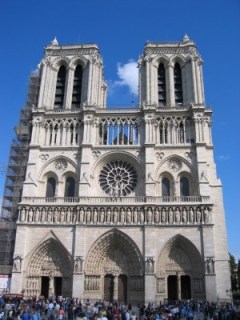
     Organ Music of Notre Dame
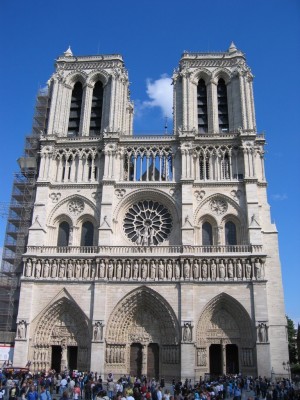
Notre_Dame_Cathedral_09-768x1024

     Jane Goodall’s glimpses into unfiltered life, glimpses into the force of the universe in ordinary things, was not the result of  academic degrees. So years later in Notre Dame Cathedral in Paris, it was her years in Gombe and the life of the forest that opened her senses to the force of organ music that she heard reverberating in the soaring arches of the cathedral.  A career might have provided the name of the piece (Bach’s Toccata and Fugue in D Minor), but not the soul-searing experience.

     In the cathedral, filling the entire vastness, it seemed to enter and possess my whole self.  It was as though the music itself was alive.  That moment, a suddenly captured moment of eternity, was perhaps the closest I have ever come to experiencing ecstasy, the ecstasy of the mystic

     Is-ness

     There are different paths and different words for such moments of acute awareness:  Sometime in the early 1950s, looking into a vase of flowers – “a full-blown Bell of Portugal rose, shell-pink with a hint at every petal’s base of a hotter, flamier hue; a large magenta and cream-colored carnation; and, pale purple at the end of its broken stalk, the bold heraldic blossom of an iris” – Aldous Huxley, in a state of altered consciousness as part of an experiment testing the effects of mescaline, was seeing, he later wrote, “what Adam had seen on the morning of his creation – the miracle, moment by moment, of naked existence.”  Someone asked, he wrote, “Is it agreeable?”  “Neither agreeable nor disagreeable,” he answered.  “It just is.”  Jacob  Boehme – who had seen all heaven in the sunlight reflected off a pewter bowl – had used the word istigkeit for such a moment, “is-ness.”  In Notre Dame Cathedral, and in moments along the way, Jan Goodall’s world, too, was too full to talk about, too full for opinion, too full for judgment.  There was all the time in the world and all the space.  Is-ness required no kibitzing.

Commentary on the Slow Walk

(If you haven’t tried out the Slow-Walk I recommended January 16, you should put off reading my commentary below.  It will spoil the fun of making your own discoveries. )

Bike Path 2

 I have traveled much in Concord.Preview Changes
– Henry David Thoreau

     At first,  walking slowly can feel awkward. We actually have to pay attention to each step we take.  That wears off rapidly, though, and then something remarkable happens. When we are “going somewhere” our focus is out ahead a few feet, but when we’re simply walking around, the focus recedes to where we are.  All of a sudden, the world becomes a vast museum of infinite wonder.  Ask any little kid. Instead of passing through the surroundings, we move in a envelope that travels with us.  Then, Thoreau, who lived out his life in Concord, Massachusetts, makes perfect sense.  And there seems to be plenty of time to get everything done.

My students used to come back from our slow walks all aglow.  When you are all aglow, you don’t care whether school keeps or not.  Right?  Witnessing our worlds seems to be sufficient.  In fact, a liberal education must surely involve a slow walk.  All of a sudden you want to write a poem.  You even understand this haiku by Onitsura:

Look! Cherry blossoms
all over! Birds have two legs!
There: Horses have four!

A Liberal Education

You can even couple the Slow-Walk with  the Surface-features Game and  the Mess-Around strategy, and you are one powerful, self-directing human being.  Is there anything wrong with that?  And what could be more practical than slow-walking algebra?  When you slow-walk algebra,  learning feels effortless.

Let me throw in a bit of Goethe here :

People seek a central point.  That is hard and not even right.  I should think a rich, manifold life, brought close to the eyes, would be enough without express tendency; which, after all, is only for the intellect.

Does this commentary hold water for you?  Let me know.

Take a Slow Walk

    Why, who makes much of a miracle?
As for myself, I know of nothing but miracles.
– Walt Whitman

OLYMPUS DIGITAL CAMERA

To see what Whitman was talking about, try a Slow Walk.  Once I stumbled on this way of getting around the sea of intelligence, I always asked the students in all my classes – composition, college skills, film, literature – to give it a go. It takes about half an hour, and you don’t have to do anything or think about anything; you just have to walk around at about one pace per second – and not talk to anyone.  One        and    two     and     three —  like that.  I knew of lots of things that might happen, but I never wanted spoil it, so I left it at that.

Try it out:    

       Walk around at about one pace per second – and don’t talk to anyone.  

If you’d like to squeeze the juice out of this experiment, write down your reflections when you’re finished.  Let me know what you think about it.    I’ll offer some commentary in my next posting.

Dickinson on the Word

500px-Demuth_Charles_I_Saw_the_Figure_5_in_Gold_1928

A WORD is dead
When it is said,
  Some say.
I say it just
Begins to live
That day.


Once you utter — or even think — an idea, it begins a life-long journey and has such as viral influence that it can circumnavigate the world in the blink of an eye. And you can never stuff it back in the bottle.  No entity is an isolate. Everything affects everything else. Gypsum and humans — we all  have a powerful influence on our environment.  By taking thought, you change the world. Gee, even by being here!

What do you think about that idea?


There’s More to Anything

Quote

Here’s a little poem from the manuscript for Realms of Gold. See what you think. This photo is across the street from the Cable-Car Barn in San Francisco. What’s going on where you walk?
Near the Cable-Car Barn

/>

Here is the godhead –
street people, dog shit, camellias,
parking meters, smell of home fries –
and me trotting freely in the street.
– and I thought it was just
the city.


Life’s Illusions

Image

Line Drawing of a Box.  Which of the two views on the right is correct?  See commentary in next post.

Line Drawing of a Box. Which of the two views on the right is correct? See commentary in next post.

The line from “Both Sides Now”, ‘I really don’t know life at all’, just about sums it up. So I like to keep the line drawing of a box in the back of my mind. It keeps me a bit more aware of my situation when I try to sort out what’s what. If we can see the box as only one or the other of the boxes to its right, we are going to stub our toes on life all day long. A box of multiple possibilities is wonderfully more engaging. There is more to anything when you think about it.

Solution to Matchstick Puzzle 2

Puzzle:  Arrange six matchsticks to form four equilateral triangles.

I doubt you could ever get four triangles from six matchsticks on a flat surface, but the Mess-Around approach might free up the thinking so that the third dimension comes to mind. To tell you the truth, that tingle of excitement when it dawned on me that I could move into space was the real pay-off.  After that it’s sort of easy, isn’t it. I think the pleasure of realizing something, anything, is what motivates us all to get up out of bed in the morning. “I wonder what exciting is going to happen today,” as Pooh’s little friend Piglet put it.  What do you think about that?

If you can think of any other solutions to this puzzle, I’ll post them for you with pleasure.

If you like messing around with these puzzles, let me know and I’ll add some more.

Chapter 6: Barfly Matchstick Puzzle 2

Here’s another puzzle for you to practice on. Use your new flexible thinking.

Puzzle: Arrange the six matchsticks to form four (4) equilateral triangles.

I’ll show you the wanted answer in a later post. (God only knows what other answers you migh tcome up with that I would never have thought of.)

Chpter 4: How the Mess-Around Method Works and Why


[This post is a follow-up of my previous post.  You should read that first before continuing.]

The Way You Think

Think about what was going on in your mind and how your were feeling while you were working on the matchstick puzzle.

●   You felt the solution coming on and knew it before it clicked into your conscious mind. “Getting it” included feeling it, and the solution came from somewhere other than your logical conscious mind.  The first step in taking control of your thinking processes is to realize this.

A friend solved the puzzle in less than minute. When I first tried it years ago, it took me lots longer – but I hadn’t spent so much time in bars.  I remember giving the puzzle to an audience of 250 and their coming at it in all sorts of ways.  Gradually, here and there all over the room I could hear bursts of, “Got it!” But even though their ways of going about it differed widely, they all used the same mechanism: Focusing in on the problem with their conscious minds, the way a beagle sniffs around and picks up the scent of a rabbit.  Once she focuses on the trail, her body takes over, and it’s curtains for the rabbit.

●   That’s what you did, too.  You glanced over the situation and the instructions.  That’s your first go at it– seeing what’s there and double checking what you’re asked to do. You browse around.

●   You begin to focus in on what you need to do.  That’s the next level of involvement.  You focus.  For reasons I’ll go into later, you may focus very quickly and see the solution immediately, or you may need to mess around some more, maybe lots more.

Over the years you collected and stored lots of tools in your conscious mind.  If you discuss with others how they went about solving the puzzle, you will see they have their own unique collections.   Some people are tactile and pick up the matchsticks  or slide them around.  Some will mentally hitch a ride on one and glide around.  You may have checked your kit to see if you have some tools that have served well in similar situations.  If you’ve done lots of puzzles like this, then, like my friend, you probably saw the solution right away.

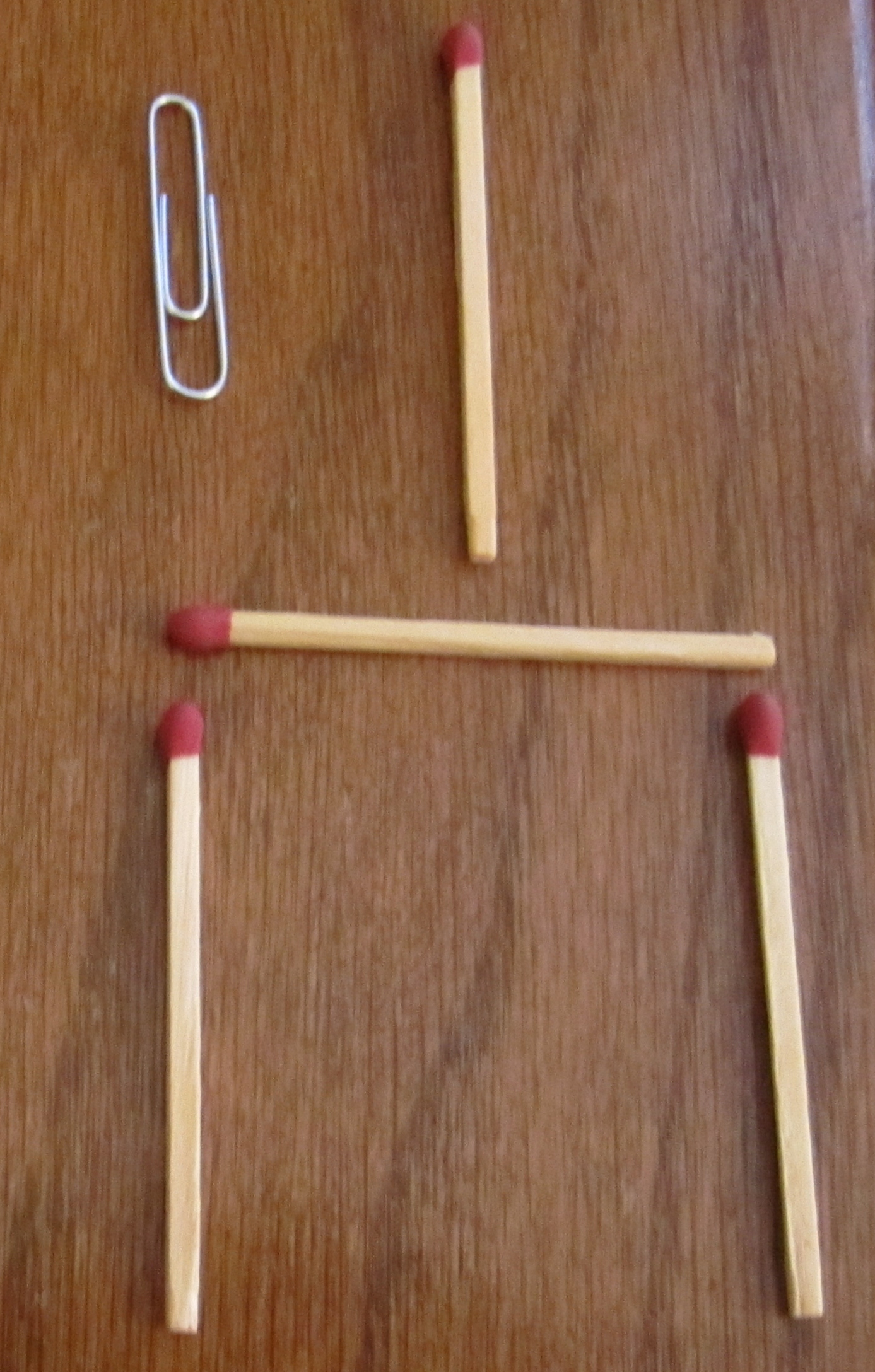
Here’s the solution:


Crazy Logic

I should add that some students came up with solutions I never dreamed of, some of them quite ingenious, and seeing all those crazy ways of doing things allowed me to keep on adding tools to my own kit.   This is what I did come to realize:

Within the limits of biology and nature, we all have all the tools we need to fulfill our own lives, and no problem or situation that is truly our own is beyond our capacity to manage it.  This may seem like a crazy assertion, but try out your new flexibility and ask yourself, “From what point of view does that statement make sense?


It’s obvious, isn’t it, that the minute we emerge from the womb we set about educating ourselves (our selves). That’s what babies do.  It’s their job.  When you solved the matchstick puzzle you were continuing this process of educating yourself. And you know perfectly well how to do that.  Just as trees know how to grow themselves, people know how to grow themselves.  We are born that way.  “Messing around” is just another way of describing how we use the conscious mind to focus in on things we need to do.  “Intelligent play” might be another way to characterize what you’re doing.

brain1

SANDBOX

The job of our logical conscious minds is to set up the problem, get our pencils sharpened, lay out the work, bring the task into focus.  This takes place in the left hemispheres of the brains of most people.  Getting things ready, setting things up – that’s the job of our conscious minds.  It is NOT their job to solve problems.  It never is.  That’s the job of our  non-conscious minds, and that work is centered in the amazingly powerful right hemisphere of the brains  of most people.  Solutions, insights, enlightenment, ALWAYS come from this hemisphere.

The less effortfully, the more playfully, you fiddle around with a situation, the more freely all the messy data will flow through your  corpus callosum into your right hemisphere.  Then you can go ride your bike, do some house work, go to bed.  Meanwhile your right hemisphere will  happily sort it all out and come up with an elegant solution.   Later on that solution will “come to you”, and you will say, “Aha!”   Then you can use your conscious mind to put what you already know into words or a painting or a computer app.   All the sweat, all the anguish, all the tears, all the anxiety, come from asking the conscious mind to do the work it is not designed to do.  Once you free it to do what it is good at, you won’t have to upset yourself anymore.  You can relax.


The conscious mind sets the stage.

The non-conscious mind resolves the issue, solves the problem, creates the insight.

The conscious mind puts what’s been discovered into a physical form.


Next Post

In my next post I’ll show you how to use this method to do a reading assignment elegantly and quickly.

WHY MESS AROUND IN REALMS OF GOLD?

Getting the Juice Out of the Morning

Villancourt-Fountain.jpgI’m reminding you here in this Realms-of-Gold website of a wonderful method for approaching daily life.  What we all want is intensification of our everyday moments.

Here’s a recent comment from a friend and former student:

Also, Clark, I know your book, Get Your ‘A,’ etc. is aimed at students, but the truths in it are really more inclusive–they apply to more than students . . . they work no matter what you’re doing, where you are, your age, etc. I find myself inserting thoughts like “not only in class…hmm, that applies to life outside of school….etc.” It’s really a book about “perspective–investigating beyond the obvious.” You’re addressing “getting your “A” out of life.”


In the next few postings, I’ll remind you of how you can use the Mess Around Method to do just about anything at all and  several specific things you can do to deal with dumb stuff they require you to put up with in college and high school.  What you may not know is that you can do it on purpose and  cut through huge piles of wasted time, time that you can use to get all the juice out of your day.

If you are in a college or high school, you can use the Mess Around Method to:

  • Read textbook chapter quickly and well.
  • Memorize easily and have fun at it.
  • Minimize time spent on assignments.
  • Write to please teachers of  freshman English.
  • Ace a test even if you didn’t study for it.
  • Pulverize unreal school anxieties.


I’ll show you how that works after a little demonstration for you to try out.

     The Mess Around Method

Conventional wisdom has it that good thinkers approach problems logically and  systematically, and with their conscious minds.  That’s flat-out wrong.

                    We never solve problems with our conscious minds.


Solutions “come to us” and then we nail them down in language or in mathematical symbols or in a painting or a poem or in what’s causing the sewer line to clog up.  That’s just the way the brain is set up.  We have a fantastic problem-solver in the not-conscious part of the brain.  If we use the conscious part appropriately, communication opens between the two parts.  Data flow to the non-conscious, which gets to work and sends back exactly the solution you need.  When that happens, you feel tingly all over.  It’s downright delightful.  I don’t have to prove this to you.  You’ve experienced it lots and lots of times.  Maybe you thought it was an accident.  It isn’t.  When you understand how it works, you can do it on purpose any time you feel like it.

Serious Play

When you were a little kid, you used this capacity with total confidence and with elegant efficiency.  It may have looked to grownups as if you were playing.  But if you look closely, you will see that playing is  serious business.   Ask lion cubs.  In the sandbox, you were getting the knack of using that wonderful mass of jelly in your skull.  I don’t know how schools got it so wrong, but they sure did.  Even in the 21th century, they still have it upside down, and kids in most schools are taught to doubt their powers.

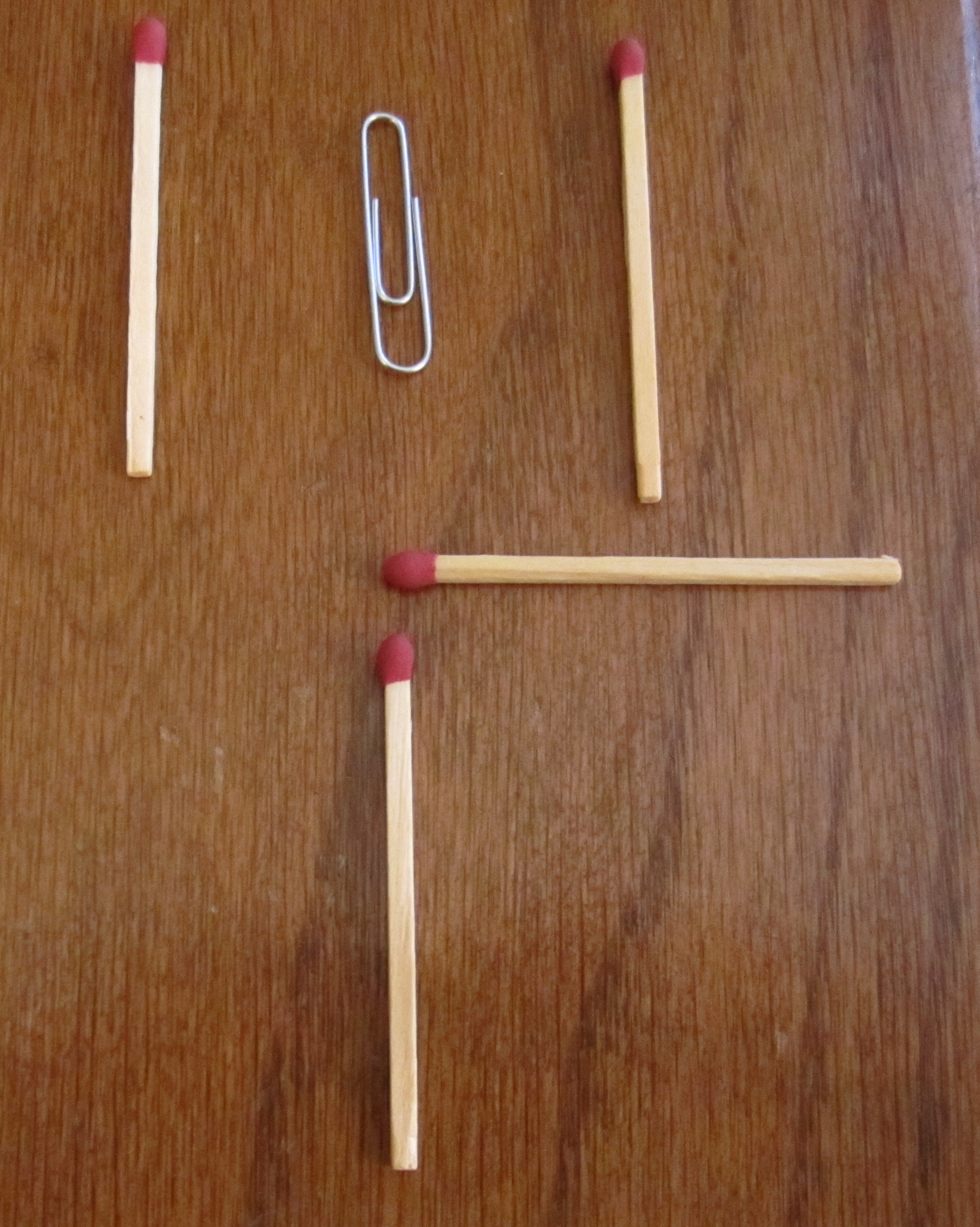
Matchstick Puzzle

   A Bar-Fly Puzzle

To demonstrate your mind in action, here is a little puzzle for you to try out.  Watch what happens as you work on it.  You will feel the solution before your conscious mind can make it concrete.  It will “come to you.”  Watch.

Here’s the puzzle:

Get the olive out of the cocktail glass in the attached photo by moving one matchstick  once and another matchstick once.  Don’t move anything else.

I’ve  given photos of the two moves in a later post .  I want you to have to experience of solving it yourself first.  In that later post I’ll explain the mechanism you used to solve the puzzle.